Description
Chapter 11: Retrofitting for Bushfire Defence
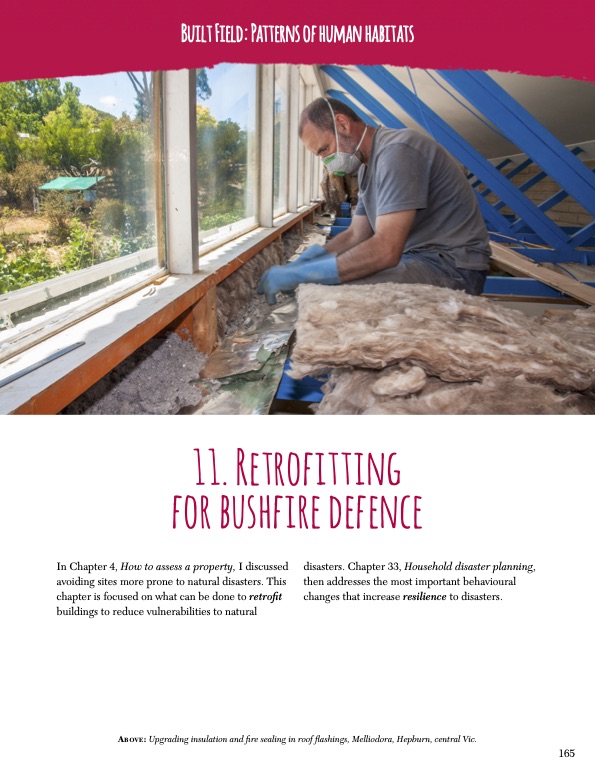
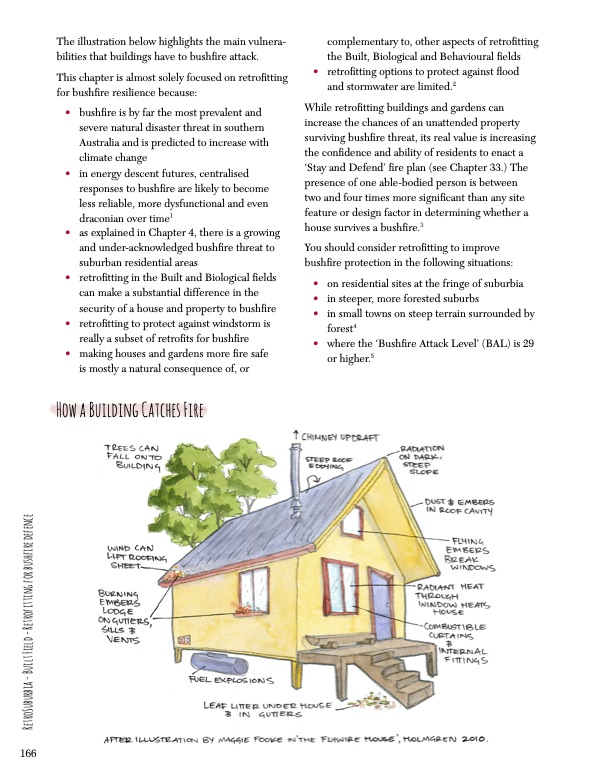
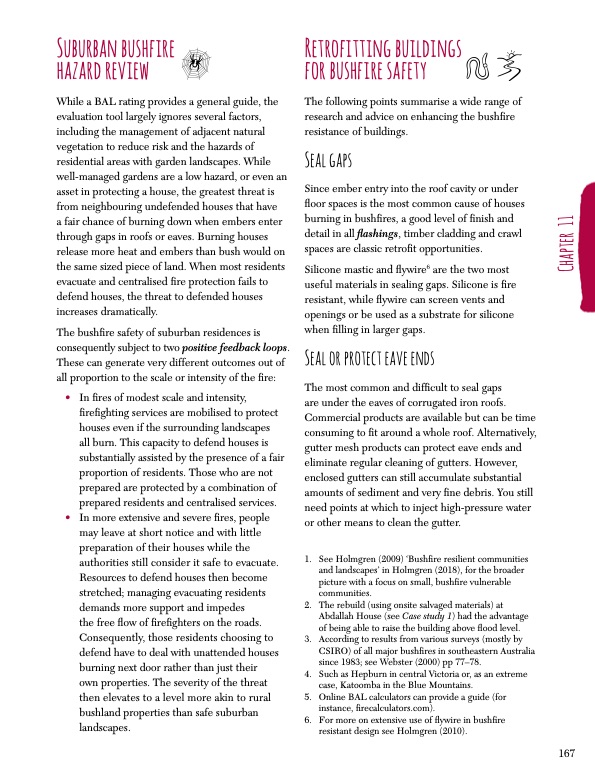
- Seal, shield & strengthen: How to close ember entry points, reinforce roofs, and upgrade glazing so homes withstand radiant heat and flying debris.
- Fire-smart gardens: Use food gardens, ponds, compost, and animal systems to create living firebreaks rather than hazards.
- Water systems that work under stress: Repurpose irrigation networks, tanks, and ponds as firefighting resources that stay functional when the grid fails.
- Neighbourhood scale resilience: Manage shared land, reduce fine fuels, and balance tidy maintenance with biodiversity and practicality.
Chapter 33: Household Disaster Planning
- Stay, defend, or shelter safely: A clear-eyed framework for choosing the right strategy — with “safe house” options for those unable to leave or defend alone.
- Community coordination: Turn streets into fireguard networks where preparedness replaces dependence.
- Psychological resilience: Train your household to act with calm purpose, not panic, when systems fail.
- Beyond bushfire: Apply the same self-reliance mindset to storms, grid failures, and social shocks.
Real stories from Central Victoria, Australia show that self-reliant households and cooperative neighbourhoods recover faster — proving resilience isn’t reaction, it’s culture.
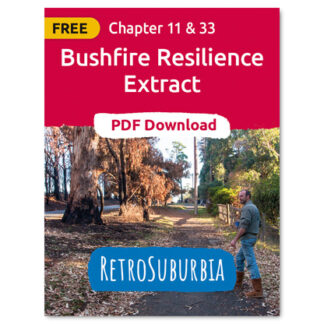
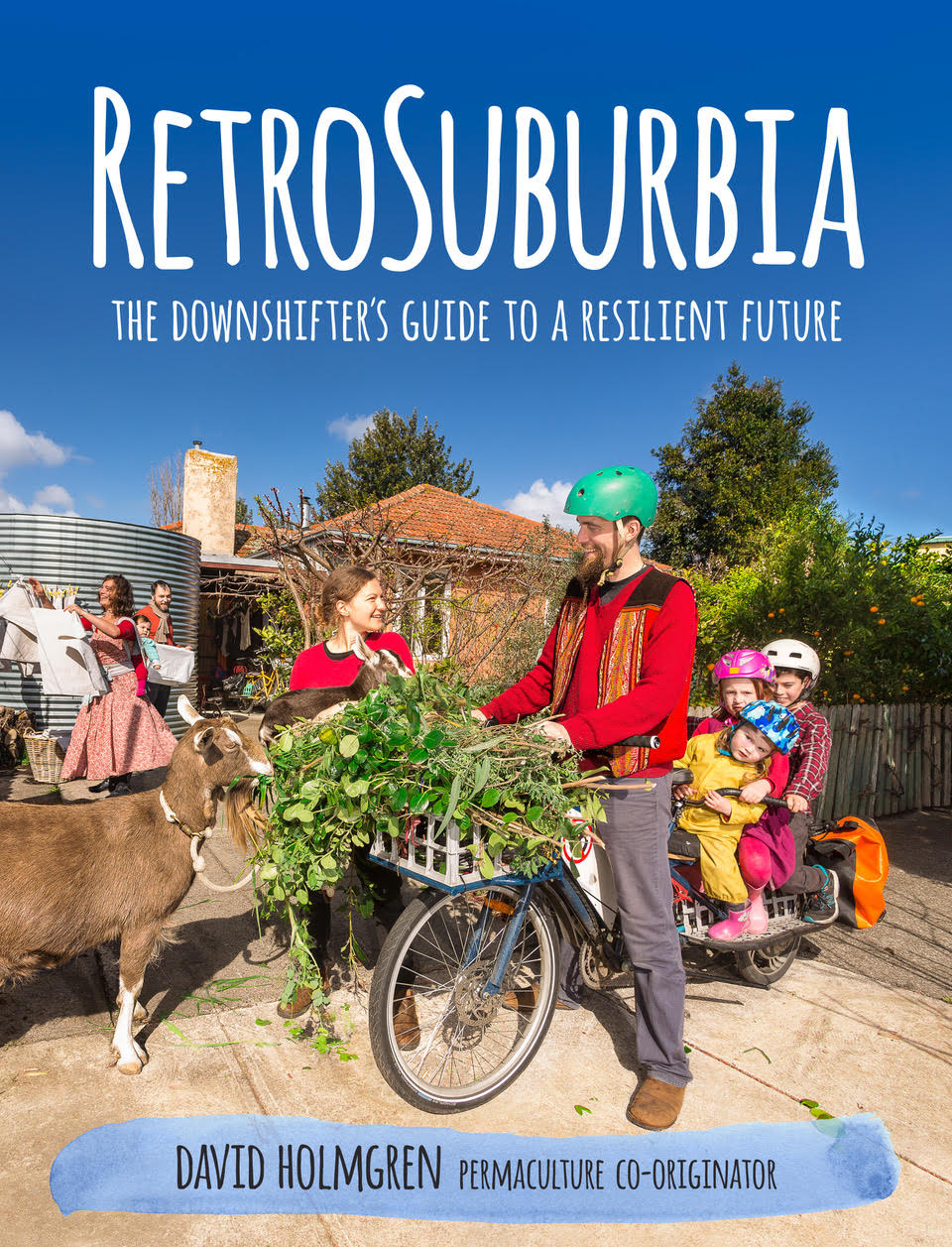
This is a standalone two-chapter extract from David Holmgren’s RetroSuburbia book, available as a downloadable PDF.
About the Author
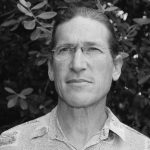 David Holmgren is best known as the co-originator with Bill Mollison of the permaculture concept following the publication of Permaculture One in 1978. Within the growing and international permaculture movement, David is respected for his commitment to presenting permaculture ideas through practical projects and teaching by personal example, that a sustainable lifestyle is a realistic, attractive and powerful alternative to dependent consumerism. As well as constant involvement in the practical side of permaculture, David is passionate about the philosophical and conceptual foundations for sustainability, which he explored in Future Scenarios: How Communities Can Adapt to Peak Oil and Climate Change (2009), and Permaculture: Principles and Pathways Beyond Sustainability (2002). RetroSuburbia: the downshifter’s guide to a resilient future (2018) is his manual for practical action. With an increasingly high profile as a public speaker, David Holmgren provides leadership with his refreshing and unorthodox approach to the environmental issues of our time. David lives with his partner Su Dennett at “Melliodora”, a one-hectare (2.5 acre) permaculture demonstration site at Hepburn Springs, Central Victoria, Australia. Visit his web site at holmgren.com.au.