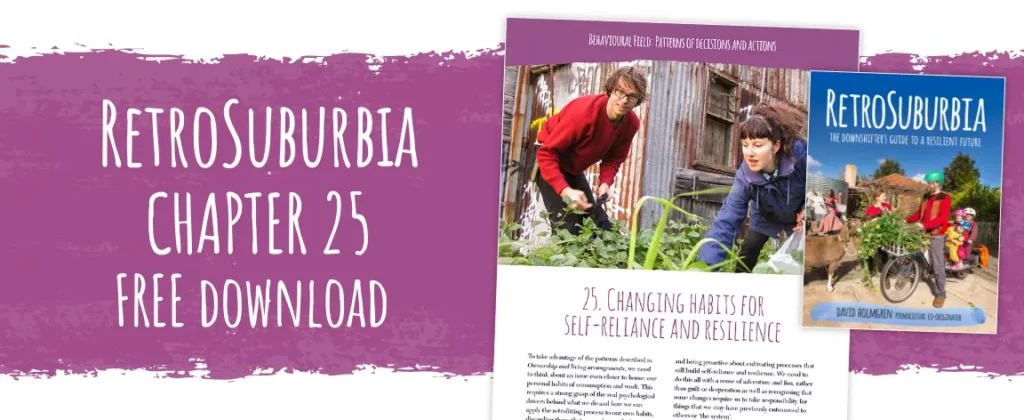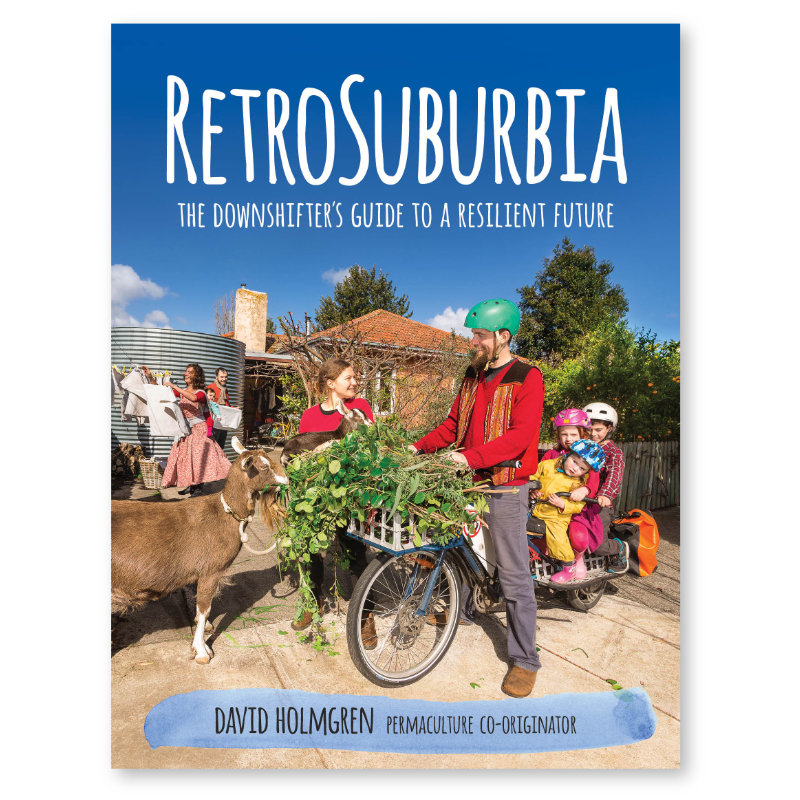

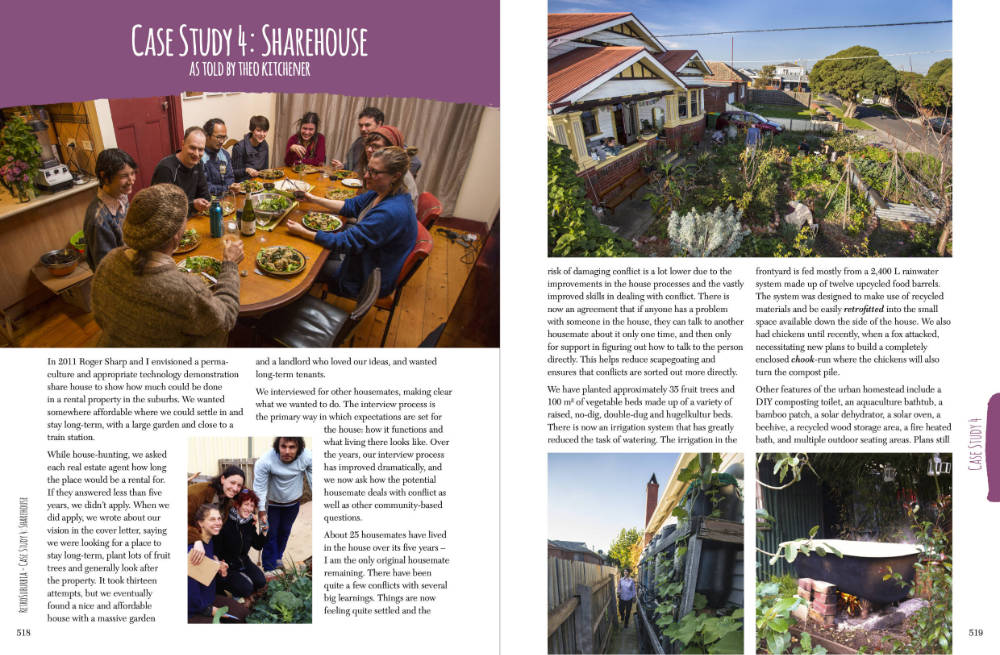
Description
Online preview of ‘RetroSuburbia: the downshifter’s guide to a resilient future’
Outline of RetroSuburbia
RetroSuburbia is divided into three main sections: Built Field, Biological Field and Behavioural Field along with an introductory section ‘Setting the scene’.
Setting The Scene
Setting The Scene explores the big-picture issues and concepts. It includes thinking tools that David believes are useful in creating household resilience towards the challenges likely to occur in the future.
Key challenges and retrosuburban responses outlines the connections between the personal and global challenges of the near future and how suburbia might a good place to survive and thrive in challenging futures. It also introduces some of the thinking tools, such as permaculture and pattern languages, to help retrofit suburbia one household at a time.
Built Field: Patterns of Human Habitats
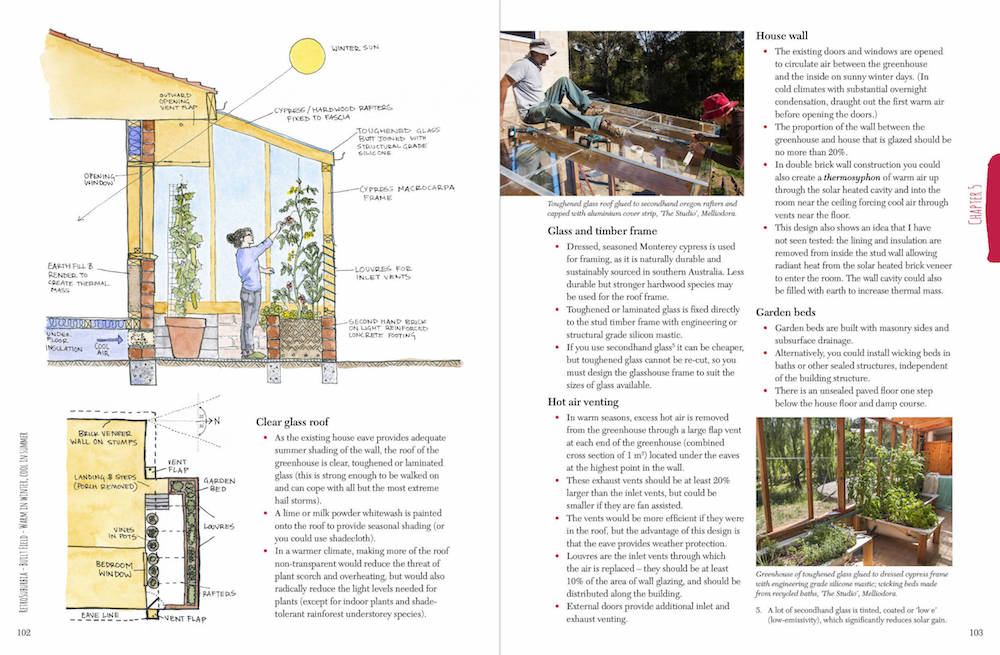
The Built Field covers the recurring patterns and design solutions relevant to retrofitting detached houses and the other physical systems that support suburban households. This is an obvious starting point for many who want to make their place a better long-term prospect.
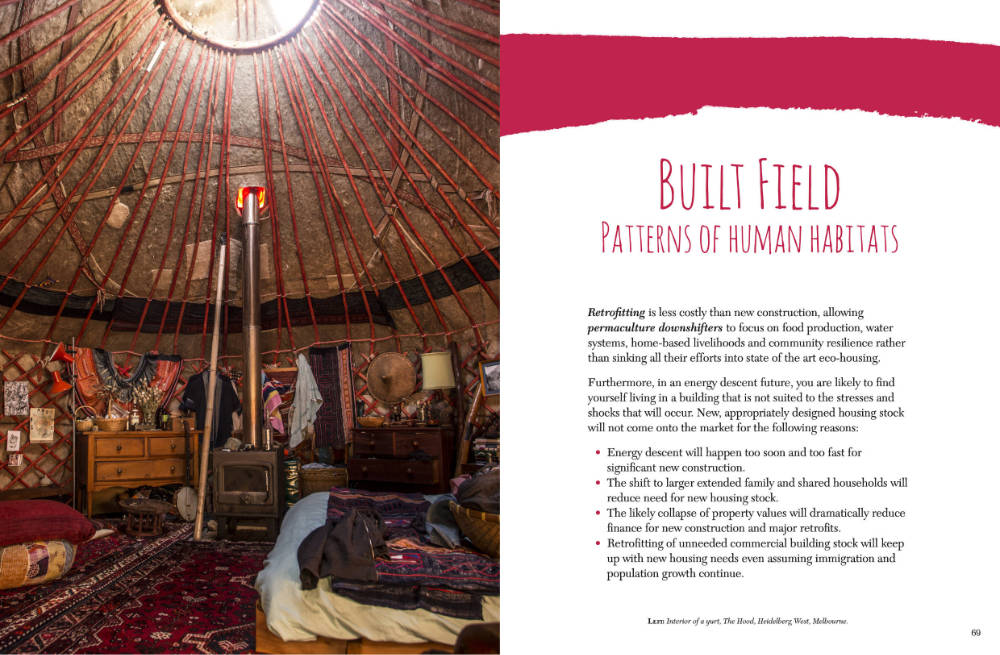
Retrofitting is less costly than new construction, allowing permaculture downshifters to focus on food production, water systems, home-based livelihoods and community resilience rather than sinking all their efforts into state of the art eco-housing.
Biological Field: Patterns of life and growth
The possibilities for retrofitting the Biological Field are many and varied. Every residential block has soil with a history of use and/or abuse, established plantings, some of which may produce food, and a wider ecological context of sunshine, water, wind, vegetation and wildlife that influence the site.
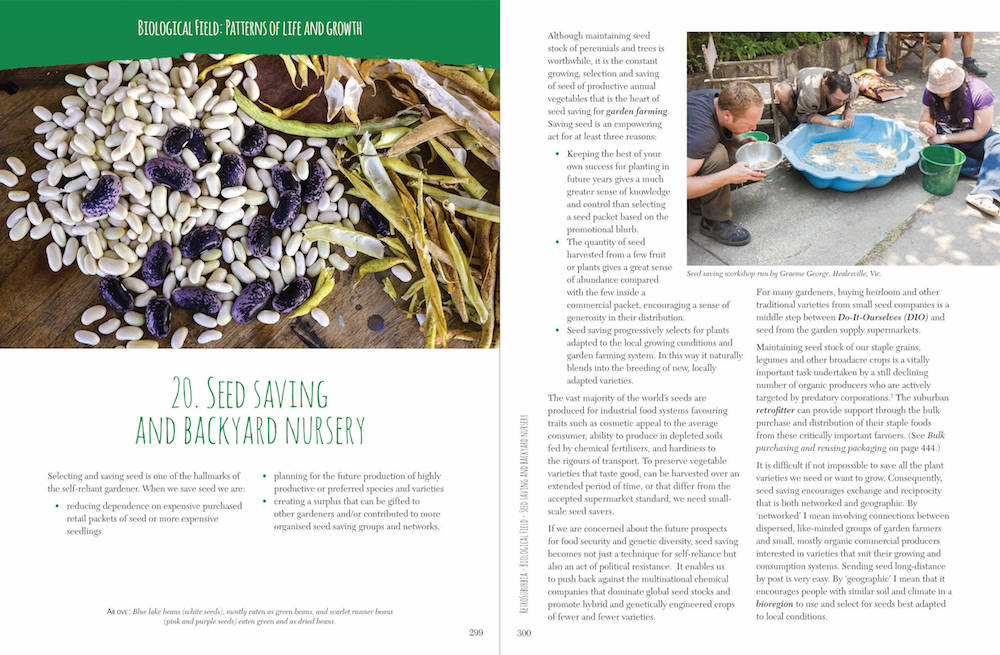
This section introduces recurring patterns and proven design solutions for abundant garden farming in suburbia. It doesn’t tell you how to raise seedlings or graft a tree but it will help you select and design the best growing systems for vegetables and fruit trees, along with guidelines on what to grow to make best use of what space you have without moving to a rural property.
Behaviour Field: Patterns of decisions and actions
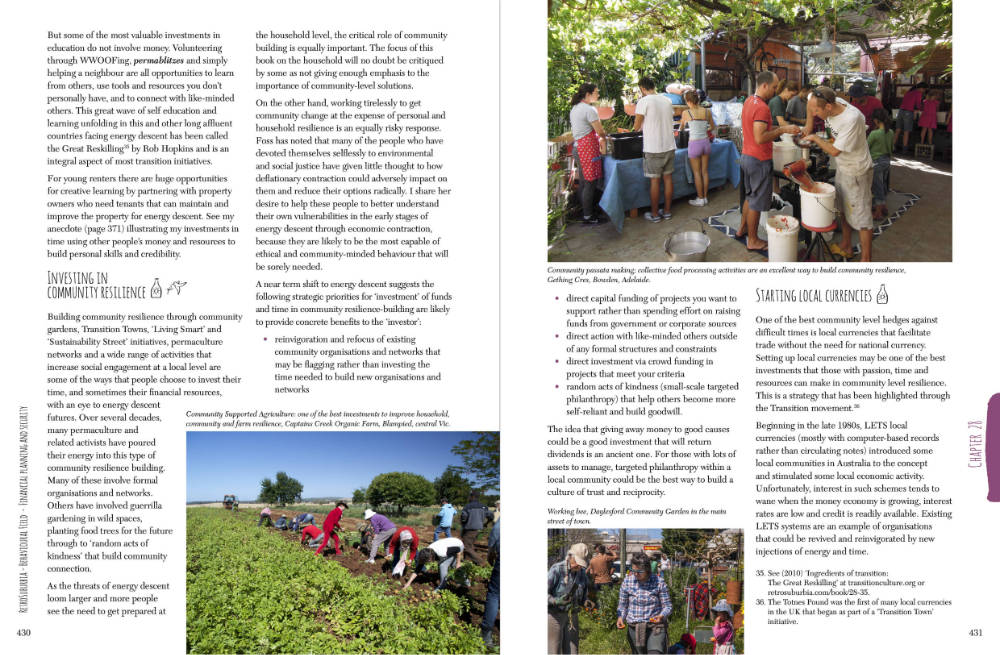
The Behavioural Field includes everything about how we live in the Built and Biological Fields, from our most unconscious actions through to complex collective organisation that extends from the household out into the wider community and economy.
In every chapter David has tried to provide a strategic overview, practical tips and encouragement to collaborate in bringing retrosuburbia to life – and making it the new normal in your household, street and neighbourhood. Even when we can’t change the building, the season or the people we live with, we can always change how we see and experience life for the better.
For more resources check out RetroSuburbia.com
- 592 pages
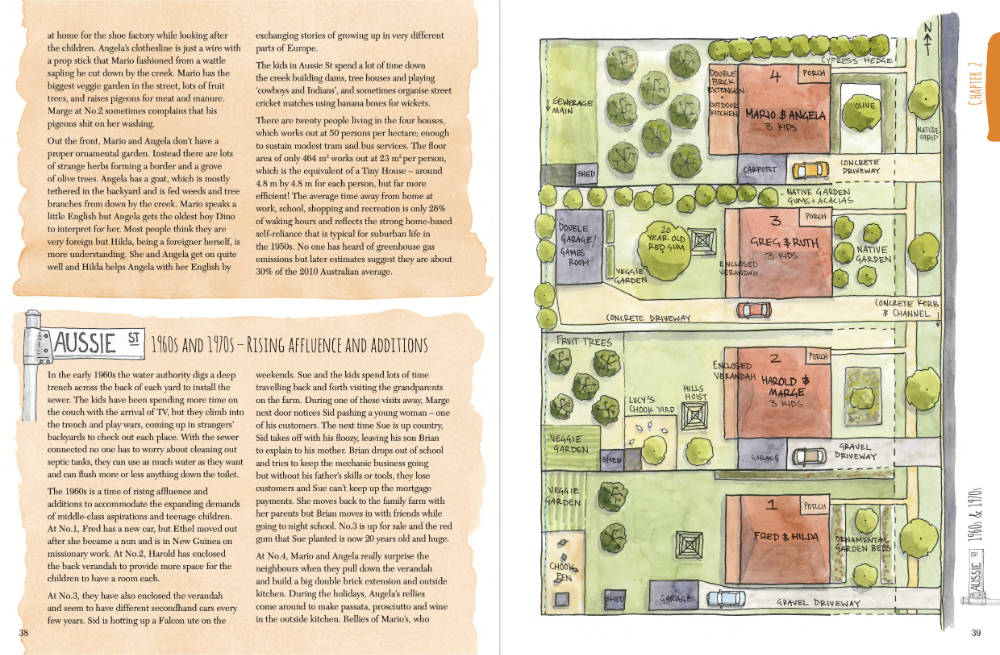
- 90+ watercolour illustrations by artist Brenna Quinlan
- 400+ full colour photos
- Foreword by Costa Georgiadis (Gardening Australia)
- 34 chapters, spanning 3 fields – the Built, Behavioural and Biological
- Includes case studies: real-life examples of households creating change and building resilience
- Designed by Richard Telford
- Published 2018 by Melliodora Publishing, Australia
- Printed in Australia by Focus Print Group
- Printed on Australian made FSC certified paper (30% recycled)
- ISBN: 9780994392879
About the Author
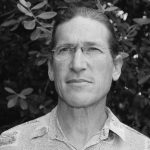 David Holmgren is best known as the co-originator with Bill Mollison of the permaculture concept following the publication of Permaculture One in 1978. Within the growing and international permaculture movement, David is respected for his commitment to presenting permaculture ideas through practical projects and teaching by personal example, that a sustainable lifestyle is a realistic, attractive and powerful alternative to dependent consumerism. As well as constant involvement in the practical side of permaculture, David is passionate about the philosophical and conceptual foundations for sustainability, which he explored in Future Scenarios: How Communities Can Adapt to Peak Oil and Climate Change (2009), and Permaculture: Principles and Pathways Beyond Sustainability (2002). RetroSuburbia: the downshifter’s guide to a resilient future (2018) is his manual for practical action. With an increasingly high profile as a public speaker, David Holmgren provides leadership with his refreshing and unorthodox approach to the environmental issues of our time. David lives with his partner Su Dennett at “Melliodora”, a one-hectare (2.5 acre) permaculture demonstration site at Hepburn Springs, Central Victoria, Australia. Visit his web site at holmgren.com.au.
About the Illustrator
 Brenna Quinlan spent four years living at Melliodora, the permaculture demonstration site founded by David Holmgren and Su Dennett in Central Victoria, Australia. She is currently building a strawbale house and planting her own garden at a permaculture community in the Great Southern, WA. Brenna has worked as an illustrator for several organisations including the Bob Brown Foundation, the Australian Food Sovereignty Alliance, and the Stephanie Alexander Kitchen Garden Program. She is also part of the Grow Do It permaculture teaching team, and regularly collaborates with Milkwood Permaculture and Melliodora Publishing on various projects and publications. Support Brenna on Patreon and gain access to digital downloads of her work, as well as behind the scenes footage. Sign up to her newsletter here, and follow her on Instagram.